Test Bank For McCance and Huethers Pathophysiology ISBN: 9780323789905, 9TH Ed The Biologic Basis for Disease in Adults and Children by Julia Rogers
Course:
Pathophysiology
Institution:
Pathophysiology
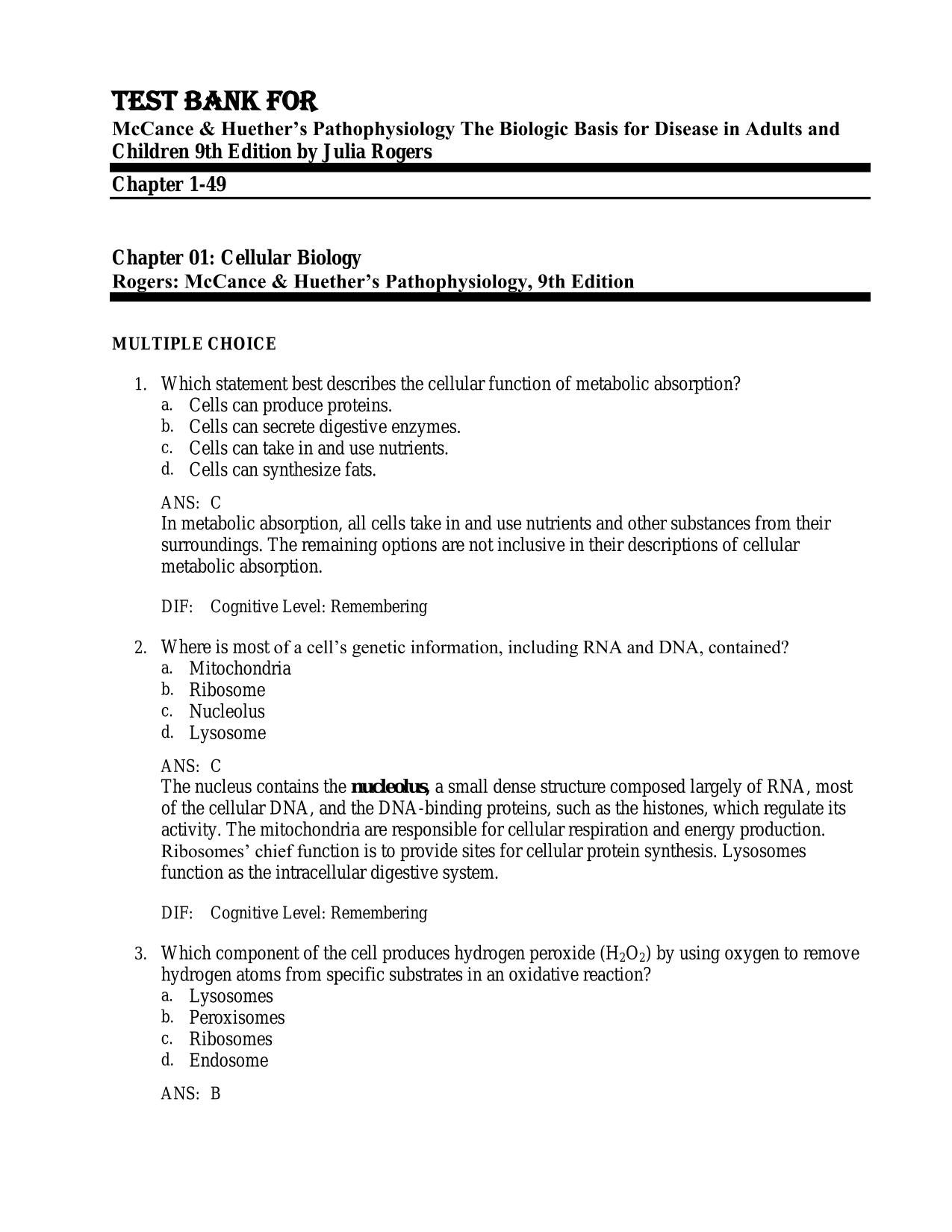
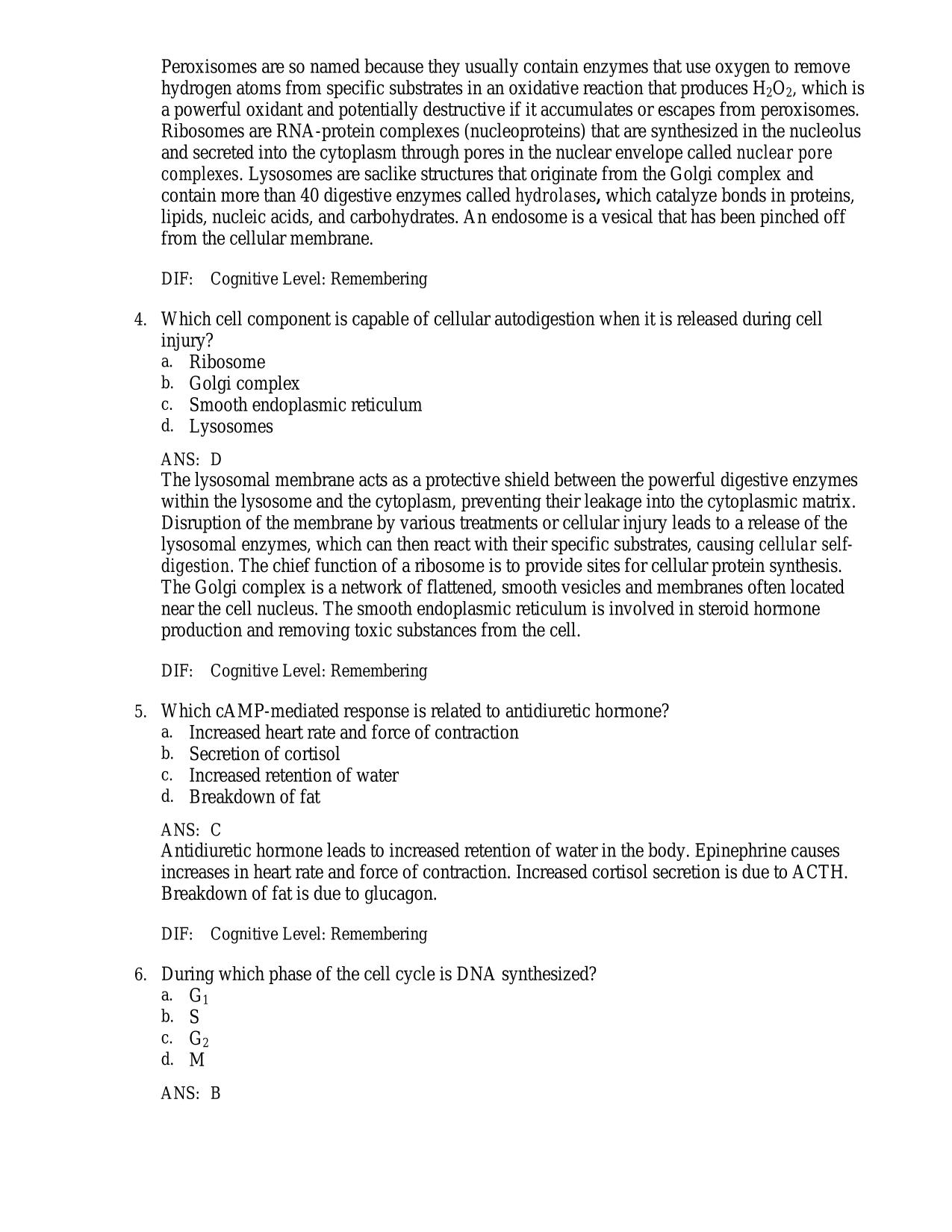
Test Bank For McCance and Huethers Pathophysiology ISBN: 9780323789905, 9TH Ed The Biologic Basis for Disease in Adults and Children by Julia Rogers MULTIPLE CHOICE 1. Which statement best describes the cellular function of metabolic absorption? a. ...
After purchase, you get:
✅ Instant PDF Download
✅ Verified answer explanations
✅ Refund if not Satisfied
✅ Prepared for 2025/2026 test cycle
Overview
This material encourages active engagement through solution walkthroughs that reinforce both theory and application. Rather than passively reading, you're constantly interacting with the content through problem-solving. This active learning approach makes study sessions more dynamic and information more memorable. Many learners find they retain knowledge better when they've worked through problems rather than just reviewed notes. Candidates using Test Bank For McCance and Huethers Pathophysiology ISBN: 9780323789905, 9TH Ed The Biologic Basis for Disease in Adults and Children by Julia Rogers can expect thorough coverage of foundational concepts and frequently examined themes. The material ensures you have solid grounding in basics before tackling advanced applications. This all-inclusive approach means there won't be unexpected gaps in your knowledge when you sit for the exam. Students appreciate the peace of mind that comes from knowing they've covered all vital content areas.
Who Is This For?
Effective for learners who prefer to study through real exam simulations rather than broad, unfocused summaries. This practical approach resonates with hands-on learners. The realistic practice helps build both knowledge and self-assurance. Anyone preparing for Bank For McCance and Huethers Pathophysiology ISBN: 9780323789905, 9TH Ed The Biologic Basis for Disease in Adults and Children by Julia Rogers, including adult learners and working professionals, will benefit from the methodical layout of this resource. Many users report feeling better prepared after working through the materials. The logical progression builds understanding step by step.
Related Keywords
Detailed Study Description
Frequently Asked Questions
Document Information
| Uploaded on: | November 1, 2025 |
| Last updated: | November 17, 2025 |
| Number of pages: | 457 |
| Written in: | 2025/2026 |
| Type: | Exam (elaborations) |
| Contains: | Questions & Answers |
| Tags: | Test Bank For McCance and Huethers Pathophysiology ISBN: 9780323789905, 9TH Ed The Biologic Basis for Disease in Adults and Children by Julia Rogers MULTIPLE CHOICE 1. Which statement best describes the cellular function of metabolic absorption? a. Cells can produce proteins. b. Cells can secrete digestive enzymes. c. Cells can take in and use nutrients. d. Cells can synthesize fats. ANS: C In metabolic absorption, all cells take in and use nutrients and other substances from their surroundings. The remaining options are not inclusive in their descriptions of cellular metabolic absorption. DIF: Cognitive Level: Remembering 2. Where is most of a cell’s genetic information, including RNA and DNA, contained? a. Mitochondria b. Ribosome c. Nucleolus d. Lysosome ANS: C The nucleus contains the nucleolus, a small dense structure composed largely of RNA, most of the cellular DNA, and the DNA-binding proteins, such as the histones, which regulate its activity. The mitochondria are responsible for cellular respiration and energy production. Ribosomes’ chief function is to provide sites for cellular protein synthesis. Lysosomes function as the intracellular digestive system. DIF: Cognitive Level: Remembering |
Seller Information

AdelineJean
User Reviews (0)
Exam (Elaborations)
$17.50
Add to Cart
100% satisfaction guarantee
Refund Upon dissatisfaction
Immediately available after purchase
Available in Both online and PDF
$17.50
| 0 sold
Discover More resources
Inside The Document
Test Bank For McCance & Huether’s Pathophysiology The Biologic Basis for Disease in Adults and Children 9th Edition by Julia Rogers Chapter 1-49 Chapter 01: Cellular Biology Rogers: McCance & Huether’s Pathophysiology, 9th Edition MULTIPLE CHOICE 1. Which statement best describes the cellular function of metabolic absorption? a. Cells can produce proteins. b. Cells can secrete digestive enzymes. c. Cells can take in and use nutrients. d. Cells can synthesize fats. ANS: C In metabolic absorption, all cells take in and use nutrients and other substances from their surroundings. The remaining options are not inclusive in their descriptions of cellular metabolic absorption. DIF: Cognitive Level: Remembering 2. Where is most of a cell’s genetic information, including RNA and DNA, contained? a. Mitochondria b. Ribosome c. Nucleolus d. Lysosome ANS: C The nucleus contains the nucleolus, a small dense structure composed largely of RNA, most of the cellular DNA, and the DNA-binding proteins, such as the histones, which regulate its activity. The mitochondria are responsible for cellular respiration and energy production. Ribosomes’ chief function is to provide sites for cellular protein synthesis. Lysosomes function as the intracellular digestive system. DIF: Cognitive Level: Remembering 3. Which component of the cell produces hydrogen peroxide (H2O2) by using oxygen to remove hydrogen atoms from specific substrates in an oxidative reaction? a. Lysosomes b. Peroxisomes c. Ribosomes d. Endosome ANS: B Peroxisomes are so named because they usually contain enzymes that use oxygen to remove hydrogen atoms from specific substrates in an oxidative reaction that produces H2O2, which is a powerful oxidant and potentially destructive if it accumulates or escapes from peroxisomes. Ribosomes are RNA-protein complexes (nucleoproteins) that are synthesized in the nucleolus and secreted into the cytoplasm through pores in the nuclear envelope called nuclear pore complexes. Lysosomes are saclike structures that originate from the Golgi complex and contain more than 40 digestive enzymes called hydrolases, which catalyze bonds in proteins, lipids, nucleic acids, and carbohydrates. An endosome is a vesical that has been pinched off from the cellular membrane. DIF: Cognitive Level: Remembering 4. Which cell component is capable of cellular autodigestion when it is released during cell injury? a. Ribosome b. Golgi complex c. Smooth endoplasmic reticulum d. Lysosomes ANS: D The lysosomal membrane acts as a protective shield between the powerful digestive enzymes within the lysosome and the cytoplasm, preventing their leakage into the cytoplasmic matrix. Disruption of the membrane by various treatments or cellular injury leads to a release of the lysosomal enzymes, which can then react with their specific substrates, causing cellular selfdigestion. The chief function of a ribosome is to provide sites for cellular protein synthesis. The Golgi complex is a network of flattened, smooth vesicles and membranes often located near the cell nucleus. The smooth endoplasmic reticulum is involved in steroid hormone production and removing toxic substances from the cell. DIF: Cognitive Level: Remembering 5. Which cAMP-mediated response is related to antidiuretic hormone? a. Increased heart rate and force of contraction b. Secretion of cortisol c. Increased retention of water d. Breakdown of fat ANS: C Antidiuretic hormone leads to increased retention of water in the body. Epinephrine causes increases in heart rate and force of contraction. Increased cortisol secretion is due to ACTH. Breakdown of fat is due to glucagon. DIF: Cognitive Level: Remembering 6. During which phase of the cell cycle is DNA synthesized? a. G1 b. S c. G2 d. M ANS: B The four designated phases of the cell cycle are: (1) the G1 phase (G = gap), which is the period between the M phase (M = mitosis) and the start of DNA synthesis; (2) the S phase (S = synthesis), during which DNA is synthesized in the cell nucleus; (3) the G2 phase, during which RNA and protein synthesis occurs, the period between the completion of DNA synthesis and the next phase (M); and (4) the M phase, which includes nuclear and cytoplasmic division. DIF: Cognitive Level: Remembering 7. What organic compound facilitates transportation across cell membranes by acting as receptors, transport channels for electrolytes, and enzymes to drive active pumps? a. Lipids b. Proteases c. Proteins d. Carbohydrates ANS: C Proteins have several functions, including acting as receptors, transport channels for electrolytes, and enzymes to drive active pumps Lipids help act as the ―glue‖ holding cell membranes together. Proteases cause the breakdown of protein. Carbohydrates are involved in cellular protection and lubrication and help produce energy via oxidative phosphorylation. DIF: Cognitive Level: Remembering 8. Understanding the various steps of proteolytic cascades may be useful in designing drug therapy for which human diseases? a. Cardiac and vascular disorders b. Autoimmune and malignant disorders c. Gastrointestinal and renal disorders d. Endocrine and gastrointestinal disorders ANS: B Understanding the various steps involved in this process is crucial for designing drug interventions. Dysregulation of proteases features prominently in many human diseases, including cancer, autoimmunity, and neurodegenerative disorders. Cardiac, vascular, gastrointestinal, renal, and endocrine disorders do not involve this process. DIF: Cognitive Level: Remembering 9. Which structure prevents water-soluble molecules from entering cells across the plasma membrane? a. Carbohydrate chains b. Glycoprotein channels c. Membrane channel proteins d. Lipid bilayer ANS: D The bilayer’s structure accounts for one of the essential functions of the plasma membrane. It is impermeable to most water-soluble molecules (molecules that dissolve in water) because the water-soluble molecules are insoluble in the oily core region. The bilayer serves as a barrier to the diffusion of water and hydrophilic substances while allowing lipid-soluble molecules, such as oxygen (O2) and carbon dioxide (CO2), to diffuse through it readily. Carbohydrate chains, glycoprotein channels, and membrane channel proteins do not prevent water-soluble molecules from entering cells across the cell membrane. DIF: Cognitive Level: Remembering 10. A student asks for an explanation of the absolute refractory period of the action potential. What response by the professor is best? a. A stronger than normal impulse will evoke another response. b. No stimulus is able to evoke another response at this time. c. Multiple stimuli can produce more rapid action potentials. d. The hyperpolarized state means a weaker stimulus produces a response. ANS: B During the absolute refractory state of the action potential, no stimulus is able to evoke another response from the cell. A stronger than normal impulse may generate a response in the relative refractory period. This period of time is not related to the number of stimuli. A hyperpolarized state means a stronger than normal stimulus would be needed to generate a response. DIF: Cognitive Level: Remembering 11. Which form of cell communication is used to within the cell itself and with other cells in direct physical contact? a. Protein channel (gap junction) b. Plasma membrane-bound signaling molecules c. Hormone secretion such as neurotransmitters d. Extracellular chemical messengers such as ligands ANS: B Cells communicate in three main ways; they display plasma membrane-bound signaling molecules that affect the cell itself and other cells in direct physical contact with it, they affect receptor proteins inside the target cell, and they form protein channels (gap junctions) that directly coordinate the activities of adjacent cells. Neurotransmitters are released by neurons and cross the synaptic cleft to communicate with the cells they innervate. Ligands are involved in binding processes. DIF: Cognitive Level: Remembering 12. Which mode of chemical signaling uses blood to transport communication to cells some distance away? a. Paracrine b. Autocrine c. Neurotransmitter d. Hormonal ANS: D
CourseHero & Studypool Unlocks
Get Unlocked CourseHero and Studypool documents files instantly to your email, simply by pasting your link and clicking "Unlock Now". Learn more on how to unlock here.
Gradesity

We are here to help
Questions? Leave a message!
Newsletter
Get notified upon new uploads. Subscribe to our Newsletter.