TEST BANK FOR PATHOPHYSIOLOGY: A PRACTICAL APPROACH 4TH ED BY LACHEL STORY ISBN 9781284205435 Latest 2025/2026
Course:
PATHOPHYSIOLOGY
Institution:
PATHOPHYSIOLOGY
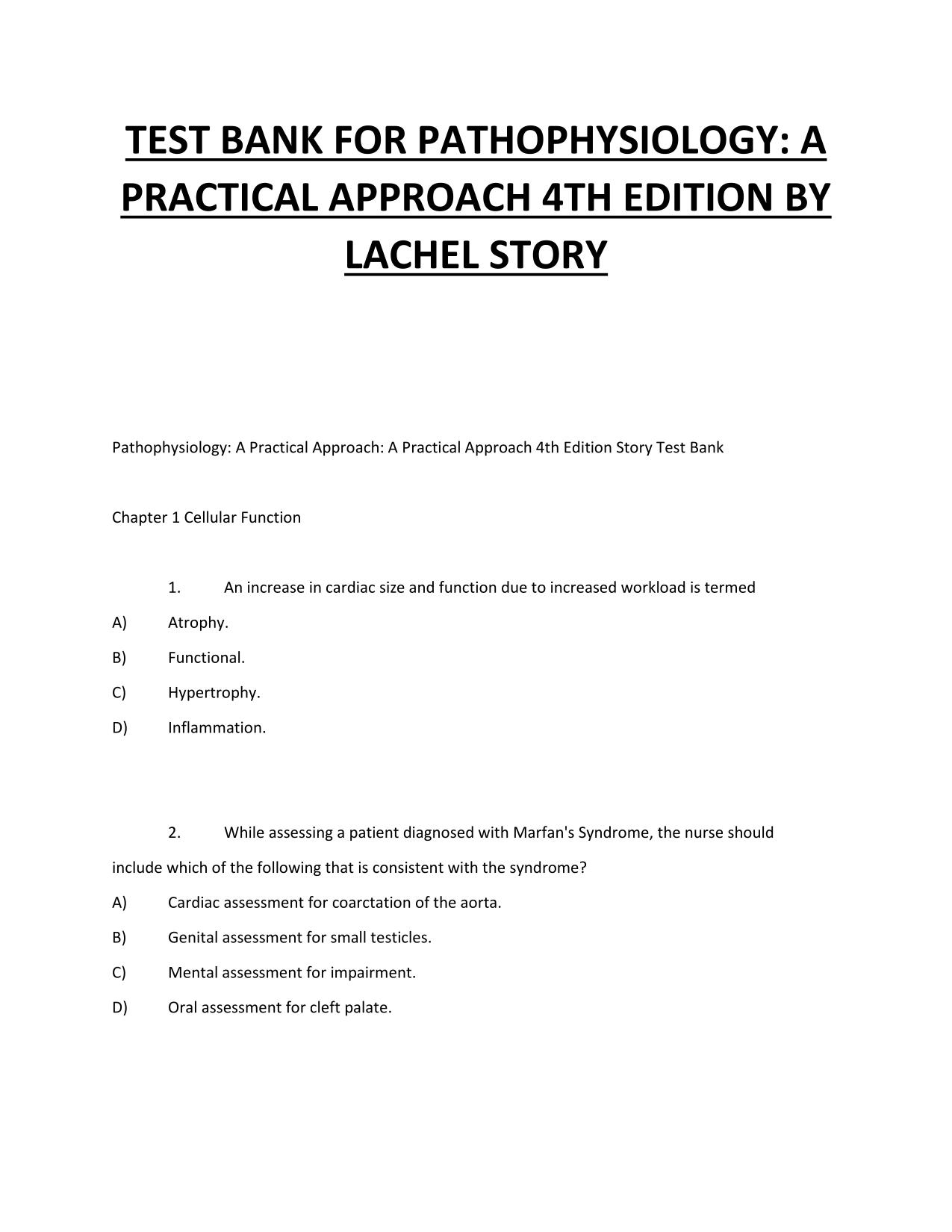
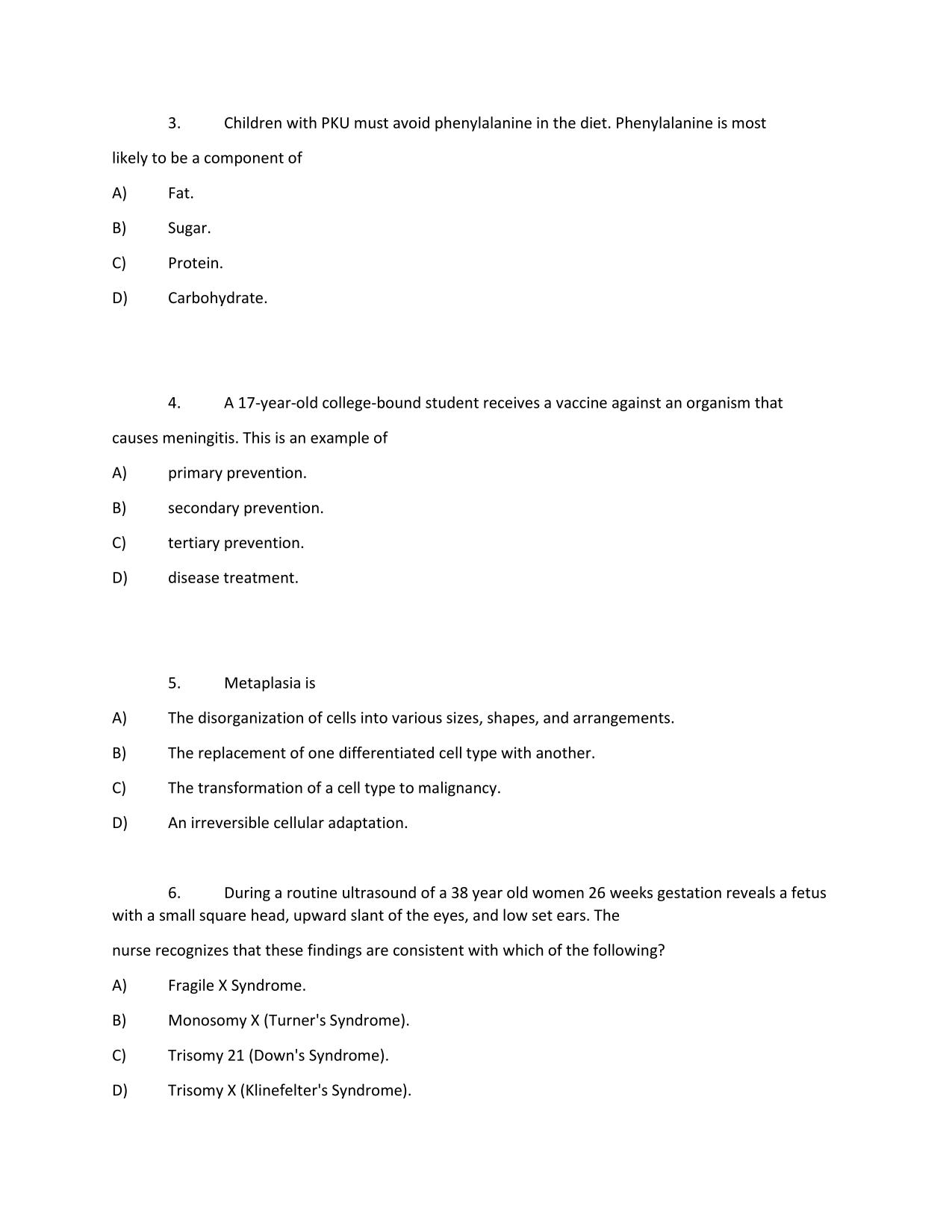
TEST BANK FOR PATHOPHYSIOLOGY: A PRACTICAL APPROACH 4TH ED BY LACHEL STORY ISBN 9781284205435 Latest 2025/2026 Pathophysiology: A Practical Approach: A Practical Approach 4th Edition Story Test Bank Chapter 1 Cellular Function 1. An increase in cardi...
After purchase, you get:
✅ Instant PDF Download
✅ Verified answer explanations
✅ Refund if not Satisfied
✅ Prepared for 2025/2026 test cycle
Overview
Questions are arranged to build from basic concepts to more advanced challenges, making the learning curve smoother and more systematic. You'll notice your certainty growing naturally as you excel at each level before moving to the next. This scaffolding approach prevents that overwhelmed feeling that often comes with jumping into complex topics too quickly. Many learners appreciate how this progression mirrors the way we naturally learn - building step by step from simple to sophisticated. This study guide organizes difficult topics into manageable sections, allowing learners to study BANK FOR PATHOPHYSIOLOGY: A PRACTICAL APPROACH 4TH ED BY LACHEL STORY ISBN 9781284205435 / content more efficiently. Complex subjects are broken down into bite-sized pieces that build naturally from basic to advanced. The logical progression prevents that overwhelmed feeling that often comes with challenging material. You'll be surprised how quickly you're mastering topics that once seemed intimidating.
Who Is This For?
Useful for individuals re-entering test readiness after a long break, especially those aiming for BANK FOR PATHOPHYSIOLOGY: A PRACTICAL APPROACH 4TH ED BY LACHEL STORY ISBN 9781284205435 / certification. The material helps bridge knowledge gaps efficiently. Many returning students appreciate how it helps them get back up to speed quickly. Ideal for motivated learners who want both conceptual clarity and hands-on question practice centered around BANK FOR PATHOPHYSIOLOGY: A PRACTICAL APPROACH 4TH ED BY LACHEL STORY ISBN 9781284205435 /. Many find it strikes the right balance between theory and application. The integrated approach helps knowledge stick better.
Related Keywords
Detailed Study Description
Frequently Asked Questions
Document Information
| Uploaded on: | November 1, 2025 |
| Last updated: | November 17, 2025 |
| Number of pages: | 145 |
| Written in: | 2025/2026 |
| Type: | Exam (elaborations) |
| Contains: | Questions & Answers |
| Tags: | TEST BANK FOR PATHOPHYSIOLOGY: A PRACTICAL APPROACH 4TH ED BY LACHEL STORY ISBN 9781284205435 Latest 2025/2026 Pathophysiology: A Practical Approach: A Practical Approach 4th Edition Story Test Bank Chapter 1 Cellular Function 1. An increase in cardiac size and function due to increased workload is termed A) Atrophy. B) Functional. C) Hypertrophy. D) Inflammation. 2. While assessing a patient diagnosed with Marfan's Syndrome, the nurse should include which of the following that is consistent with the syndrome? A) Cardiac assessment for coarctation of the aorta. B) Genital assessment for small testicles. C) Mental assessment for impairment. D) Oral assessment for cleft palate.3. Children with PKU must avoid phenylalanine in the diet. Phenylalanine is most likely to be a component of A) Fat. B) Sugar. C) Protein. D) Carbohydrate. 4. A 17-year-old college-bound student receives a vaccine against an organism that causes meningitis. This is an example of A) primary prevention. B) secondary prevention. C) tertiary prevention. D) disease treatment. 5. Metaplasia i |
Seller Information

AdelineJean
User Reviews (0)
Exam (Elaborations)
$15.00
Add to Cart
100% satisfaction guarantee
Refund Upon dissatisfaction
Immediately available after purchase
Available in Both online and PDF
$15.00
| 0 sold
Discover More resources



Inside The Document
TEST BANK FOR PATHOPHYSIOLOGY: A PRACTICAL APPROACH 4TH EDITION BY LACHEL STORY Pathophysiology: A Practical Approach: A Practical Approach 4th Edition Story Test Bank Chapter 1 Cellular Function 1. An increase in cardiac size and function due to increased workload is termed A) Atrophy. B) Functional. C) Hypertrophy. D) Inflammation. 2. While assessing a patient diagnosed with Marfan's Syndrome, the nurse should include which of the following that is consistent with the syndrome? A) Cardiac assessment for coarctation of the aorta. B) Genital assessment for small testicles. C) Mental assessment for impairment. D) Oral assessment for cleft palate. 3. Children with PKU must avoid phenylalanine in the diet. Phenylalanine is most likely to be a component of A) Fat. B) Sugar. C) Protein. D) Carbohydrate. 4. A 17-year-old college-bound student receives a vaccine against an organism that causes meningitis. This is an example of A) primary prevention. B) secondary prevention. C) tertiary prevention. D) disease treatment. 5. Metaplasia is A) The disorganization of cells into various sizes, shapes, and arrangements. B) The replacement of one differentiated cell type with another. C) The transformation of a cell type to malignancy. D) An irreversible cellular adaptation. 6. During a routine ultrasound of a 38 year old women 26 weeks gestation reveals a fetus with a small square head, upward slant of the eyes, and low set ears. The nurse recognizes that these findings are consistent with which of the following? A) Fragile X Syndrome. B) Monosomy X (Turner's Syndrome). C) Trisomy 21 (Down's Syndrome). D) Trisomy X (Klinefelter's Syndrome). 7. While discussing treatment options with a parent of a newly diagnosed Monosomy X (Turner's Syndrome) child, the nurse should include which of the following? A) There is no treatment or cure. B) Symptoms of the condition are treated with estrogen. C) Symptoms of the condition are treated with testosterone. D) Institutionalization is the preferred method of managing care. 8. Which of the following assessment findings indicates an alteration in homeostatic control mechanisms? A) Fever B) Throat pain C) Joint stiffness D) Positive throat culture 9. What information should parents be given about the consequences of phenylketonuria (PKU)? A) Mental retardation is inevitable. B) PKU is commonly associated with other congenital anomalies. C) High dietary tyramine may help induce enzyme production. D) Failure to treat properly results in progressive mental retardation. 10. Injury that occurs when blood flow is diminished to tissue is called A) hypoxic B) ischemic injury. C) hyperemic D) neoplastic 11. Tay sachs is caused by which of the following? A) A deficiency or absence of hexosaminidase A B) A defect on chromosome 17 or 22 C) A mutation on chromosome 15 D) An error in converting phenylalanine to tyrosine 12. An obese but otherwise healthy teen goes to a health fair and has her blood pressure checked. This is an example of A) primary prevention. B) secondary prevention. C) tertiary prevention. D) disease treatment. 13. Characteristics of X-linked recessive disorders include which of the following? A) The son of a carrier mother has a 25% chance of being affected. B) Affected fathers transmit the gene to all of their sons. C) All daughters of affected fathers are carriers. D) Boys and girls are equally affected. 14. A) A factor associated with risk of Down syndrome is Maternal age.
CourseHero & Studypool Unlocks
Get Unlocked CourseHero and Studypool documents files instantly to your email, simply by pasting your link and clicking "Unlock Now". Learn more on how to unlock here.


Gradesity

We are here to help
Questions? Leave a message!
Newsletter
Get notified upon new uploads. Subscribe to our Newsletter.